
The Hidden Cost of ‘Self-Paced’: Why Learners Stall
Self-paced courses often fail without feedback, standards, and accountability. Learn a simple framework to make upskilling measurable without busywork.
1) Self-paced isn’t flexible—it’s ambiguous

Self-paced learning is marketed as freedom: learn anytime, anywhere. For motivated professionals and job-seekers, it sounds perfect—until real life arrives. Without a defined cadence, “I’ll do it later” becomes “I haven’t touched it in two weeks,” and progress quietly stalls. The hidden cost isn’t lack of willpower; it’s a lack of structure that turns time into friction. In career development, friction compounds fast because uncertainty creates procrastination, and procrastination erodes confidence.
Most online courses also leave standards vague. You watch videos, maybe complete a quiz, and feel productive—but you rarely know what “good” looks like in the real world. Without clear performance criteria, learners default to consumption over application. That’s why many upskilling efforts plateau at the same point: the moment skill requires feedback, deliberate practice, and interpretation. Learning science is blunt here—people improve faster when they can compare their work to explicit benchmarks and close gaps iteratively, not when they simply finish modules.
2) The three failure modes: no feedback loop, vague standards, low accountability
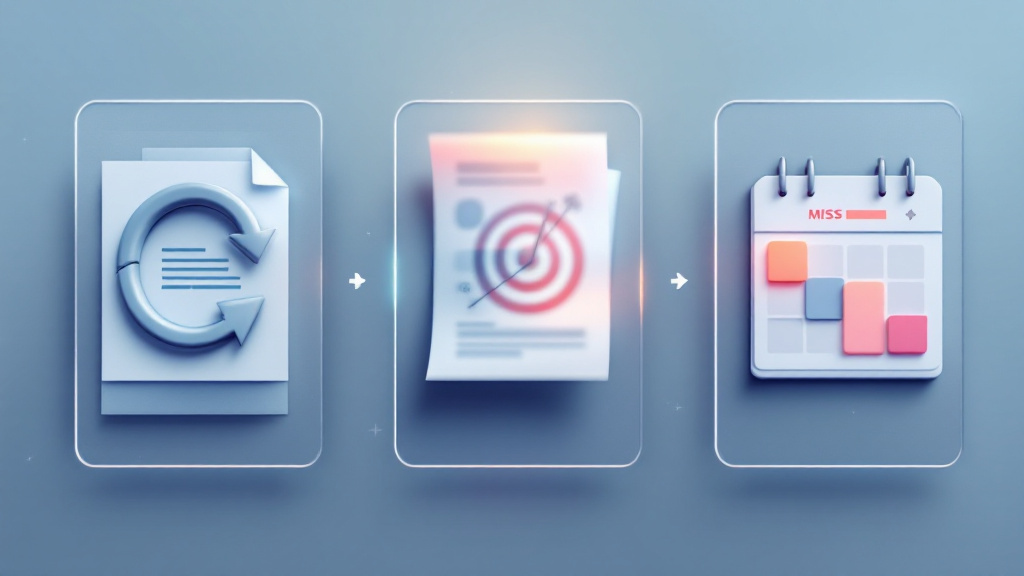
Self-paced programs fail in predictable ways. First, there’s no feedback loop: you submit nothing, or you submit once and never hear back, so mistakes become habits. Second, standards are fuzzy: learners can’t tell whether their analysis, writing, or presentation is “hire-ready” or merely “completed.” Third, accountability is optional: when no one notices a missed week, it’s easy to rationalize skipping the hard parts—especially when you’re balancing work, interviews, or a small team’s deadlines.
These issues hit high-stakes upskilling the hardest—like moving into data analytics, product, leadership, or role-specific communication—where progress is demonstrated through outputs, not viewing time. Professionals don’t just need information; they need iterative correction and proof of competence. That’s why coaching and practitioner-led review can outperform generic online courses: a coach can diagnose what’s actually blocking progress, set the next smallest step, and keep motivation tethered to measurable wins. For career development, that combination—practice, feedback, and accountability—often determines whether someone advances or abandons the goal.
3) A practical framework: baseline, cadence, checkpoints (without busywork)

If you want self-paced flexibility without the stall, add three elements: a baseline assessment, a learning cadence, and measurable skill checkpoints. Start with a short intake that captures goals, constraints, and timeline, then assess current level with a realistic task—something close to the job or workflow you’re aiming for. This establishes a starting point and prevents random content consumption. In learning science terms, it creates clear retrieval and application targets, so practice is intentional.
Next, set a cadence that’s small but non-negotiable: one live session or review touchpoint per week, plus a single deliverable that proves skill. Finally, use checkpoints with explicit rubrics—what “good” looks like, how it’s scored, and what to fix next. A lightweight coaching workflow makes this sustainable: schedule sessions, capture notes, assign homework, and score progress against milestones. Tools like SkillPilot Coaching operationalize that loop with booking, payments, and a client portal that stores feedback, async reviews, and rubric-based progress—so accountability feels supportive, not punishing. The result is online courses that actually drive upskilling outcomes and career development momentum.